
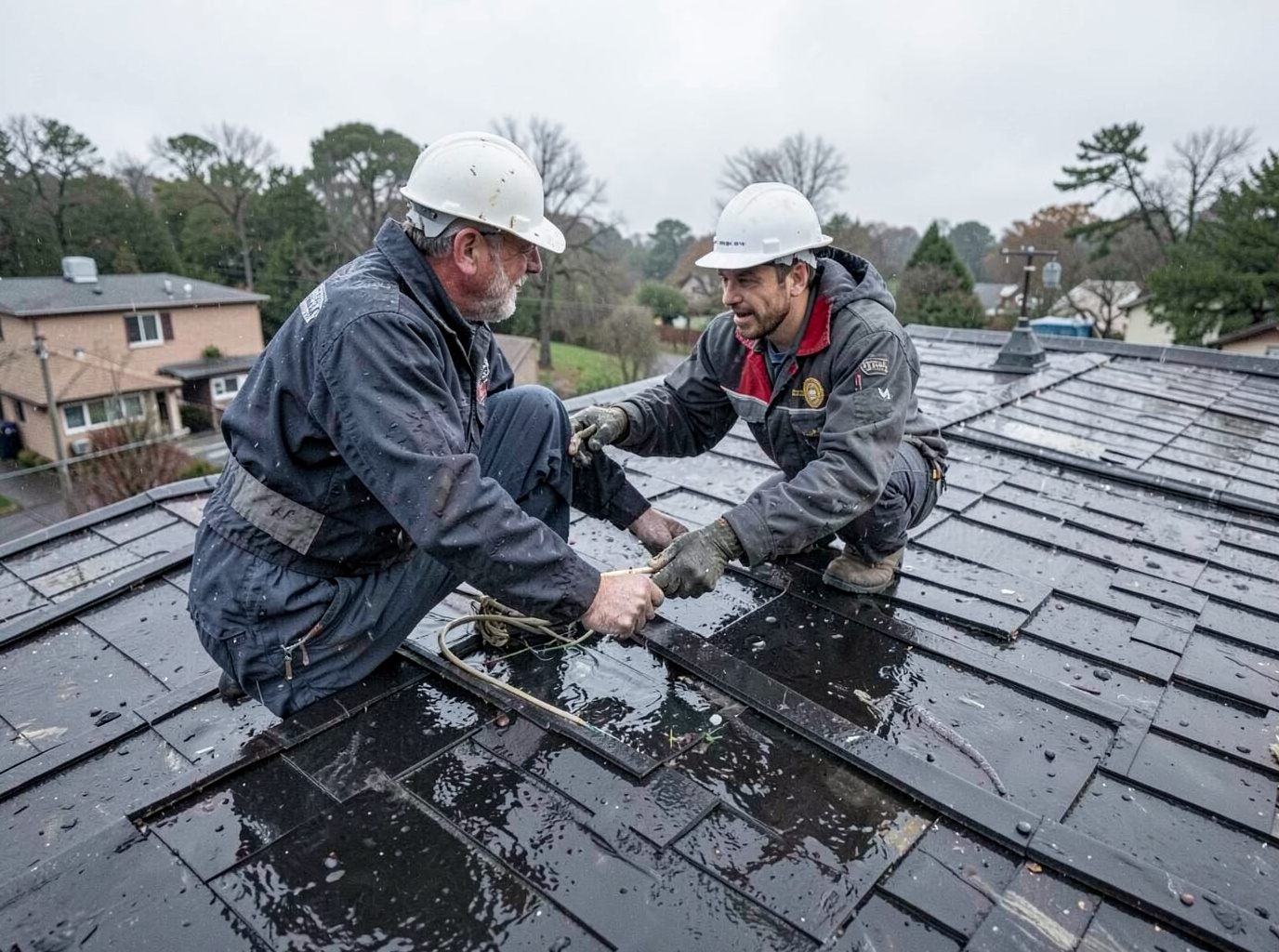
St. Joseph roofs face repeated spring hail and straight-line winds that dent asphalt shingles without always tearing them. On homes built between 1910 and 1960 in the historic north end and Hyde Park neighborhoods, multiple layers of old shingles hide impact fractures that only show once you lift the top course or check the decking from the attic. Missing these spots lets meltwater or the next rain event run straight into plaster ceilings.
A proper inspection starts on the ground looking for granule loss patterns in gutters, then moves to ridge vents and step flashing around chimneys common on two-story Victorians. We check for soft spots along the south-facing slopes where afternoon sun warms hail-bruised shingles fastest. In Buchanan County the wind often comes from the southwest, so we pay extra attention to the northeast corners where uplift starts first.
Homeowners sometimes assume a few missing tabs are the whole story. In reality, the 60 mph gusts that hit the area last May lifted underlayment on several roofs we inspected near the Missouri River bottoms, creating channels that funneled water into soffits. Walking the deck and probing suspect areas with a moisture meter catches these before they become insurance claims or full replacements.
We also note any sagging along the eaves on older homes that have settled unevenly. That tilt changes how water sheds after a storm and can turn a small ridge-cap failure into a wall leak inside the second floor.
Technician insight
In St. Joseph the thing that catches most people out with roof inspection after a storm is the second layer of shingles on pre-1970 homes along the north end. Hail dents the top layer but the damage often transfers through to the deck only on the southwest slopes where the wind drives hardest.
Hyde Park Home After May Hail
Homeowner called after softball-sized hail hit the area. We found crushed shingles on the south slope and soft decking near the chimney. Lifting a few courses revealed water already tracking under the second layer. We documented everything for insurance and the owner scheduled targeted repairs before the next rain.
Roof Inspection After a Storm Services We Offer
✓Hail Damage Assessment
Close inspection of shingle surfaces and underlying felt for impact fractures common after St. Joseph spring storms.
✓Wind Uplift Inspection
Check ridge, eaves, and flashing for lifted tabs and loosened nails caused by straight-line winds along the Missouri River corridor.
✓Attic Leak Detection
Moisture meter readings and insulation checks inside attics of older St. Joseph homes to locate water that has already passed the deck.
✓Gutter and Flashing Review
Examine gutters, downspouts, and step flashing around chimneys for debris and separation after heavy rain events.
✓Insurance Documentation Walk
Photograph and note storm-related damage in a format St. Joseph homeowners can submit directly to their carrier.
Roof Inspection After a Storm Cost in St. Joseph, MO
| Service | Typical Range | What Affects It |
|---|---|---|
| Single-story storm inspection | $125–$225 | Most common on ranch homes in the south side neighborhoods |
| Two-story or complex roof inspection | $200–$350 | Historic homes with multiple peaks or limited access |
| Re-inspection after repairs | $75–$125 | Follow-up visit once contractor work is finished |
Ranges are typical for St. Joseph, MO and confirmed with an exact written quote before any work starts.
How it works
- 1
Ground and Aerial Review
Walk the property perimeter and use binoculars or drone views to spot missing shingles, dent patterns, and debris lines.
- 2
Roof Surface Walk
Examine each slope, paying attention to hail bruising, lifted edges, and soft spots on homes in St. Joseph neighborhoods.
- 3
Attic and Soffit Check
Enter the attic to measure moisture, inspect decking from below, and trace any water paths that reached living spaces.
- 4
Findings Report
Provide written notes with photos and clear next-step recommendations tailored to the age and construction of the home.
Pricing
Most St. Joseph storm inspections fall in a modest range that reflects roof size and number of stories.